AI Reads Your Website Every Day. So Why Is It Recommending Your Competitor?
There is a moment in almost every GEO audit we run where the client goes quiet.
We show them the data. Their website is being retrieved by AI engines more than anyone else in their market. More than competitors half their size. More than businesses that have been around half as long. The AI is visiting their site constantly, reading through it, using it as research material.
And then we show them the citation rate.
Zero. Or close to it.
Every time, the first word out of their mouth is the same: why?
Why is the AI reading my website but recommending someone else? Why does a competitor with less traffic, fewer clients, and a smaller reputation get cited more? Why am I invisible in the answer, when I was clearly part of the research?
The answer changed how we think about GEO entirely.
Your Website Has Good Vibes. AI Cannot Cite Vibes.
Here is the simplest way to understand what is happening.
Think about how you remember and retell a story. If someone tells you a great story that flows naturally, has a clear point, and lands on one specific memorable fact - you will retell that story tonight at dinner. Word for word, almost.
Now imagine someone tells you an equally interesting story, but it meanders. The details keep changing. The point is somewhere in there but you have to dig for it. You walk away thinking it was a good conversation, but you cannot retell it. You do not even know where to start.
That is exactly how AI engines treat your website.
When an AI engine receives a question from a user, it retrieves dozens of sources to build its answer. It reads your website the same way you would read a book for research. But when it comes time to write the answer, it only quotes the sources that had clear, specific, directly usable sentences. The sources that were easy to retell.
If your website is full of good energy, strong branding, and compelling language that is just vague enough to never commit to a specific fact - the AI reads it, uses it to understand the shape of the answer, and then quotes your competitor who had one sentence that said exactly what the user needed to hear.
AI engines cite sentences. Not vibes.
This is one of the most common GEO mistakes we see across every audit - websites that are credible, well-designed, and completely uncitable.
The Camper Van That Was Its Own Worst Enemy
We audited a Lithuanian camper van rental company last year. Market leader. One of the most recognized brands in their category. And by far the most retrieved website in every GEO prompt we tracked for their industry.
Their citation rate was close to zero.
When we dug into why, we found the same problem repeated across their entire website. Pricing inconsistency. The homepage said rentals start from €70 per day. The pricing page said it depends on the season, with an average of €130. A blog post mentioned a summer special at €95. A FAQ answered a pricing question with "contact us for a quote."
Every single page was saying something different.
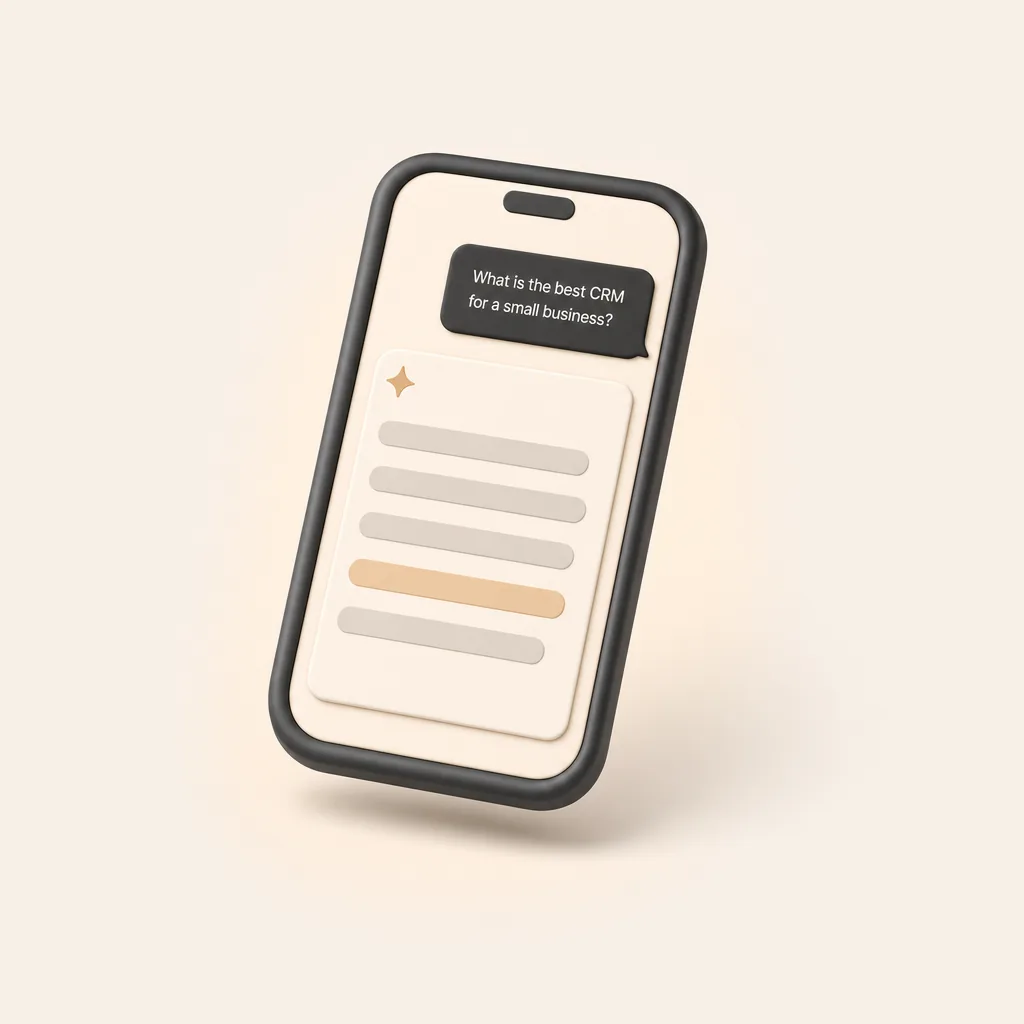
Now think about what happens when a user asks ChatGPT or Perplexity: "how much does it cost to rent a camper van in Lithuania?"
The AI retrieves that website, looks for a clear answer, and finds four contradictory ones. It does not know which page to trust. It does not know what the true answer is. So it does not cite any of them. It moves to a competitor who had one clean sentence: "camper van rentals in Lithuania start from €85 per day."
That competitor gets cited. Every time. Even though the market leader has ten times the website traffic and twenty years in the business.
Think about it from a human perspective. If I told you that renting a camper costs €70 a day, you could go home and tell your partner that tonight. Simple, memorable, retellable. But if I told you it depends on the season, the specific van, the rental period, and whether you want insurance - you would go home and say "I don't know, somewhere between €70 and €150, we'd have to call them."
You cannot retell an unclear story. Neither can an AI.
What we did was unify every pricing reference across the entire site. We gave a clear average price per van category, defined the seasonal pricing in plain terms, and made sure every page told the same story. Citation rate climbed significantly within weeks.
To understand more about how AI engines decide which brands to recommend, the same logic applies everywhere - clarity and consistency are the foundation.
The Test You Can Do Right Now, in 5 Minutes
You do not need an agency to find out if this problem exists on your website. Here is how to check it yourself, today.
Open an incognito browser window - and this part matters: do not use your own ChatGPT account. Use a fresh session with no history of your business. Better yet, ask a friend or family member who has never searched for your brand to run this test from their own device and a completely separate account.
Write out 10 to 15 prompts that your actual customers might type into an AI engine. Not your brand name. The questions they ask before they even know you exist. Things like "best marketing agency in Vilnius" or "how to improve AI search visibility" or "who offers GEO services in Lithuania."
Run each one across ChatGPT, Perplexity, and Google AI Overviews. See who gets recommended. See whether your business appears, and if it does, what the AI says about you and what source it cites.
If you see your competitor's name in clean, specific sentences and yours either missing or buried in vague language - you have found the problem.
If you want to skip the manual process, there are prompt tracking tools on the market that do this automatically. A reliable one we use is Peec.ai. Good tools start around €70 per month. Or you can book a free GEO audit with us - we track the specific prompts your customers are asking, show you your retrieval and citation rates against every competitor, and identify exactly what is blocking you from being cited.
What Makes AI Want to Quote You
After running audits across 97+ businesses, the pattern is consistent. AI engines cite content that is:
Specific - An exact number, a defined outcome, a named result. "We helped 97 businesses improve AI visibility" is citable. "We help businesses grow" is not.
Consistent - The same fact stated the same way across every page. The moment two pages contradict each other, the AI loses trust in both.
Direct - Structured like an answer, not a brochure. If a user asks "how long does GEO take to work," a page that opens with "GEO results typically appear within 4 to 12 weeks depending on technical baseline" will be cited over a page that spends three paragraphs on philosophy before getting to the point.
Easy to retell - This is the one most businesses miss. Before you publish anything, ask yourself: could someone read this sentence and repeat it to a friend ten minutes later? If the answer is no, rewrite it until it is.
As we covered in GEO is the new SEO - the businesses winning in AI search are not necessarily the biggest or the oldest. They are the ones whose content is easiest for an AI to pick up and hand to a user.
Your website is probably already being found. The AI is already visiting. The only question is whether it finds anything worth quoting when it gets there.
Frequently Asked Questions
What is the difference between retrieval and citation in AI search?
Retrieval means an AI engine accessed your website while researching an answer. Citation means it quoted your content directly and showed the user a link to your page. Retrieval with no citation means the AI read your site but found nothing specific enough to use.
Why would a smaller competitor get cited more than a larger brand?
Citation is not based on brand size or website traffic. It is based on content clarity and specificity. A smaller competitor with one clear, direct, well-structured page will be cited over a large brand whose website is inconsistent or vague.
Can contradictory information on a website really hurt GEO performance?
Yes, significantly. When AI engines find conflicting data across pages - different prices, different founding dates, different service descriptions - they cannot determine which version is accurate, so they avoid citing any of it.
How do I check if my business is being recommended by AI engines?
Open an incognito browser with no saved account history. Ask 10 to 15 prompts your customers would realistically use. Run the same test across ChatGPT, Perplexity, and Google AI Overviews. Note who appears and who gets cited. Make sure to use a fresh session with no prior history of your brand.
What is the fastest fix for low citation rates?
Audit your website for inconsistencies first - pricing, dates, service descriptions, any factual claims that appear on more than one page. Then add specific, quotable statements to your highest-traffic pages: homepage, service pages, and about page first.
What is GEO and how is it different from SEO?
GEO (Generative Engine Optimization) is the practice of optimizing your website so that AI engines like ChatGPT, Perplexity, and Google AI cite and recommend your business. Unlike traditional SEO which targets Google rankings, GEO targets the AI-generated answers that are increasingly replacing the first page of search results. Read our full breakdown here.
Agenzy offers a free GEO audit covering citation rate, retrieval rate, website consistency, and competitive benchmarking across all major AI engines. Book a call to see exactly where you stand.